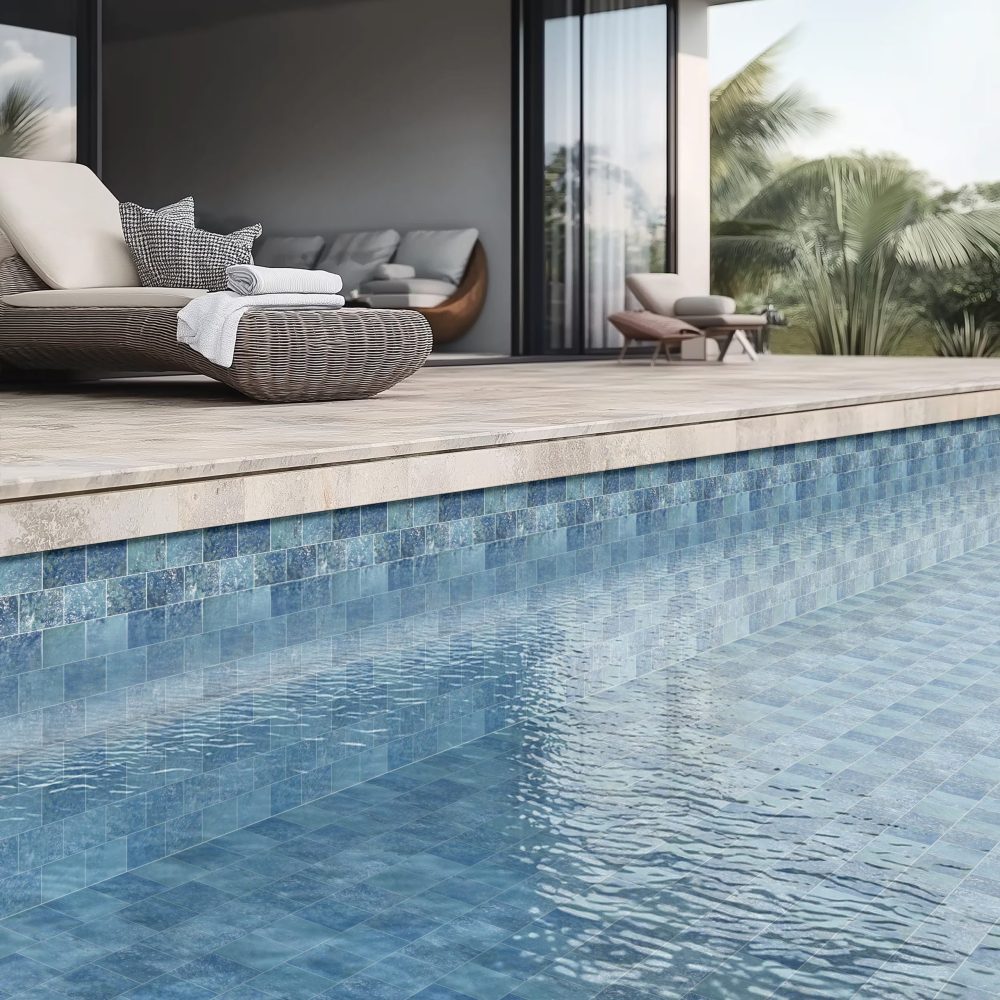
Swimming pool tile is a critical component in both residential and commercial pool construction. These tiles not only enhance visual appeal but also protect the pool structure from water damage. A high-quality swimming pool tile resists constant exposure to chlorine, UV rays, and temperature changes.
Moreover, they define the character of a pool with their color, texture, and finish. Whether creating a sleek modern look or a classic blue lagoon effect, these tiles set the tone. As design trends evolve, so do material choices and installation methods.
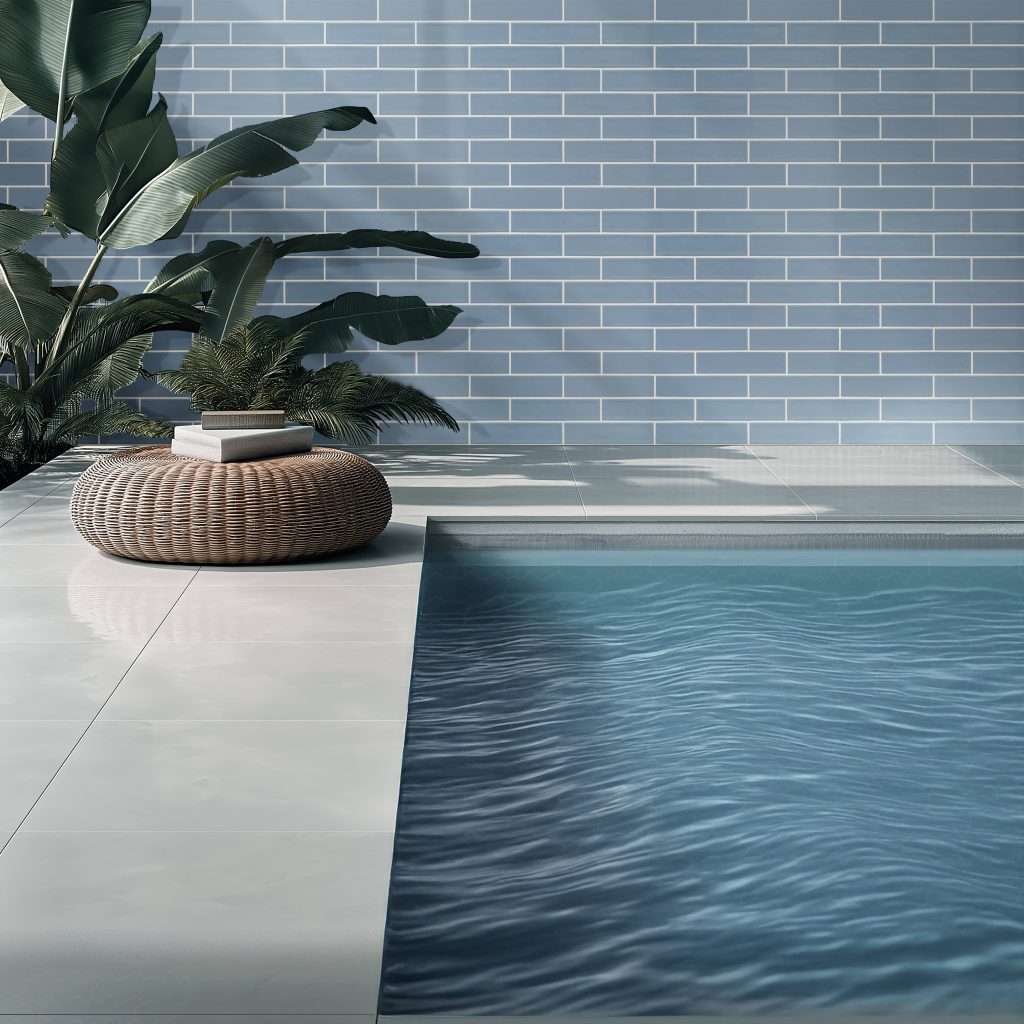 Why Swimming Pool Tile Is Essential for Pool Construction
Structural Protection Against Water Damage
One of the main reasons builders use swimming pool tile is long-term durability. Without proper tiling, concrete and plaster surfaces erode quickly. Water seeps into tiny cracks and causes further breakdown.
Tiles form a waterproof barrier along the waterline and coping edge. This zone faces the most stress due to fluctuating water levels.
They prevent algae buildup in porous materials. Smooth glazed finishes resist mold and mildew growth.
Additionally, tiles reduce maintenance needs. There’s less need for acid washing or resurfacing.
The bond between tile and substrate must be strong. Thin-set mortar or epoxy adhesive ensures lasting attachment.
Some pools extend tiling below the surface. This creates decorative bands or patterns at depth.
Therefore, beyond beauty, function drives tile use.
Preventing Edge Erosion and Maintaining Clean Lines
The waterline is where most wear occurs. Evaporation leaves behind minerals and debris. Over time, this forms a stubborn ring on untreated walls.
A properly installed swimming pool tile prevents this buildup. The smooth surface allows easy cleaning. Brushing removes residue without damaging the finish.
Tiles also protect coping edges from chipping. Swimmers grabbing the side create friction. Reinforced porcelain or glass tiles withstand this pressure.
Sharp corners are avoided. Rounded-edge tiles reduce injury risk. Safety matters just as much as appearance.
Over time, well-maintained tiles keep the pool looking new. They preserve clean lines and sharp transitions.
Thus, investing in quality swimming pool tile protects both aesthetics and safety.
Types of Pool Tile Materials
Ceramic Tiles – Affordable and Colorful
Ceramic is one of the most common materials for swimming pool tile. It offers a wide range of colors, shapes, and sizes. This makes it ideal for custom designs.
These tiles are made from clay fired at high temperatures. Glazing adds shine and moisture resistance.
They are more affordable than natural stone or glass. Budget-conscious homeowners often choose them.
However, ceramic is less durable under extreme conditions. Freeze-thaw cycles may cause cracking in colder climates.
Installation requires careful spacing. Grout joints must allow for expansion.
Sealing grout is essential. Unsealed grout absorbs water and stains easily.
Despite limitations, ceramic remains popular. Its versatility supports creative expression.
Hence, it suits interior accents or shallow areas.
Porcelain Tiles – High Density and Strength
Porcelain tiles are denser and stronger than ceramic. They absorb less than 0.5% water. This makes them ideal for full-pool surfacing.
Manufacturers press fine clays under high pressure. Firing at higher temperatures increases hardness.
They resist fading, scratching, and chemical exposure. Chlorine and saltwater have minimal effect.
Many mimic natural stone or wood grain. These realistic finishes add elegance without real stone’s cost.
Porcelain is frost-resistant. Suitable for outdoor pools in cold regions.
Cutting requires special tools. Diamond blades ensure clean edges.
Because of its strength, fewer tiles break during or after installation.
Therefore, choosing porcelain means long-term value.
 Glass Tiles – Shine, Depth, and Reflective Beauty
Visual Impact Through Light Reflection
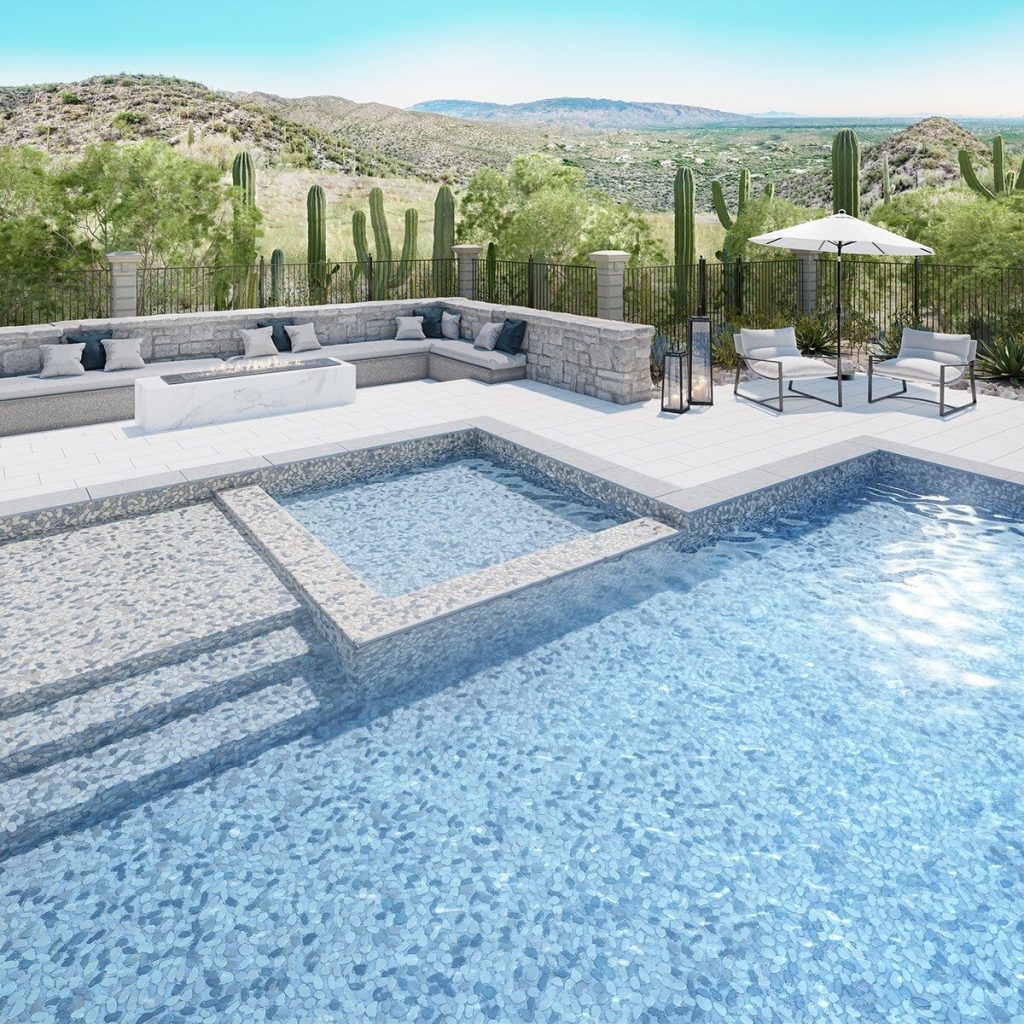
Glass tiles dramatically change a pool’s appearance. They reflect sunlight and artificial lighting. This enhances brightness underwater.
Even small pools feel larger and deeper. The shimmering effect mimics natural bodies of water.
Available in transparent, translucent, and opaque options. Each offers different light behavior.
Iridescent finishes shift color based on angle. Blues can appear green or purple in motion.
Designers use them for accent bands, mosaics, or full coverage. Some install them on floors and walls.
Homeowners love how they transform evening swimming. LED lights amplify the glow.
Therefore, glass tiles offer unmatched visual drama.
Resistance to Stains and Chemicals
Another benefit of glass swimming pool tile is low maintenance. It does not stain, fade, or etch. Harsh pool chemicals leave no marks.
Algae cannot penetrate the surface. Regular brushing keeps it clean.
Saltwater pools are safe for glass tiles. Unlike metal fixtures, they don’t corrode.
Grout still needs sealing. But the tiles themselves require no protective coating.
They stay cool to the touch. This improves comfort during hot weather.
Recycled glass options are now available. These support eco-friendly building practices.
As sustainability grows in importance, recycled content becomes a selling point.
Thus, combining beauty with resilience makes glass a top choice.
Design Options and Creative Applications
Mosaic Tiles for Custom Artwork
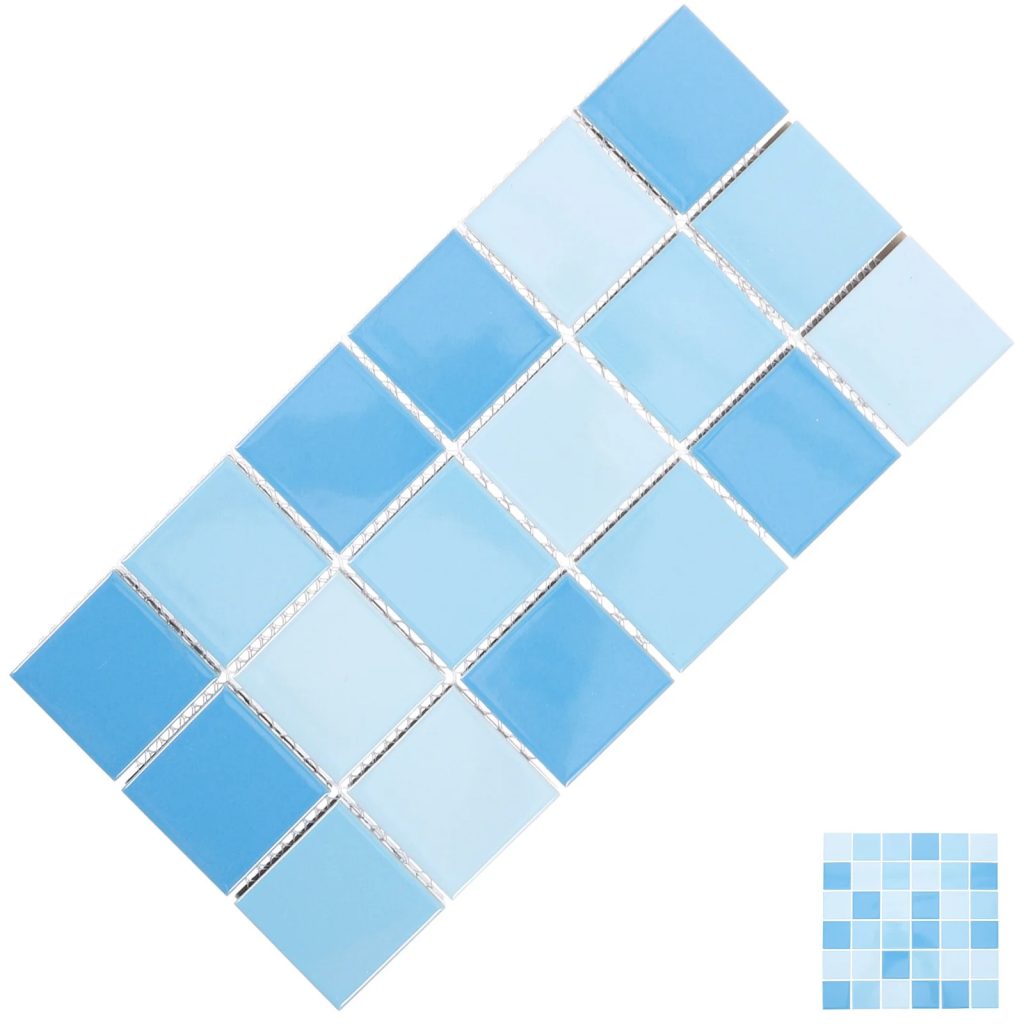
Mosaic tiles open endless design possibilities. Small pieces form intricate patterns. Fish, waves, sunbursts, and family crests all work well.
Installers mount them on mesh sheets. This speeds up placement and alignment.
Custom orders let homeowners personalize their space. Names, dates, or logos become part of the pool.
Pools with mosaic features become conversation starters. Guests notice the craftsmanship.
These designs often go near steps, benches, or entry points. High-visibility areas highlight detail.
Professional installation ensures even spacing. Hand-placed mosaics take longer but deliver better results.
Therefore, mosaics turn a functional surface into art.
Accent Bands and Waterline Borders
Accent bands add style without covering every inch. Many use tile just at the waterline.
This border defines the pool’s edge. It breaks up large wall spaces visually.
Contrasting colors make the band stand out. Navy with white, black with gold, or turquoise with gray.
Some include textured tiles. Raised dots or grooves improve grip around the rim.
Others blend subtly. Monochrome bands maintain a minimalist aesthetic.
LED lighting behind the band increases impact. Light reflects off the surface.
Thus, accent tiles offer balance between cost and effect.
 Installation Best Practices
Proper Adhesive and Spacing Techniques
Using the right adhesive is crucial for swimming pool tile longevity. Polymer-modified thin-set mortar provides strong bonding.
Epoxy-based adhesives work best in wet environments. They resist water penetration.
Tiles should be spaced evenly. Plastic spacers maintain consistent gaps.
Apply adhesive with a notched trowel. This ensures full coverage behind each piece.
Press tiles firmly into place. Slide slightly to eliminate air pockets.
Work in small sections. Avoid letting mortar dry before placing tiles.
After setting, check for levelness. Adjust while the adhesive is still soft.
Thus, technique affects both durability and appearance.
Grouting and Sealing for Waterproof Finish
Once tiles cure, grouting begins. Use non-sanded grout for narrow joints. Sanded grout works for wider gaps.
Float grout across the surface. Push it deep into each joint. Remove excess immediately.
Wipe diagonally with a damp sponge. Rinse frequently to avoid haze.
Allow 72 hours to cure. Then seal the grout with a penetrating sealer.
Reapply sealer annually. This maintains protection against moisture and stains.
Inspect grout lines regularly. Repair cracks early to prevent water infiltration.
Therefore, finishing touches determine long-term performance.
Caring for Your Pool Tile
Daily and Weekly Maintenance Tips
Maintain your swimming pool tile with regular care. Brush the waterline weekly. This prevents mineral deposits.
Use a soft nylon brush. Avoid steel wool or abrasive pads.
Skim the surface daily. Leaves and debris trap dirt against tiles.
Balance water chemistry consistently. High pH leads to scale. Low pH damages grout.
Clean spills quickly. Food dyes or sunscreen can stain if left too long.
Avoid harsh cleaners. Stick to pH-neutral solutions.
Test chlorine levels often. Excess chlorine fades some glazes over time.
Thus, simple habits extend tile life.
Dealing With Common Issues Like Chipping or Algae
Occasionally, tiles chip or crack. This happens from impact or poor installation.
Replace damaged tiles promptly. Soak surrounding area before removal.
Use a grout saw to cut joints. Gently pry out the broken piece.
Clean the back area. Apply fresh adhesive and insert the new tile.
Regrout and reseal. Match color as closely as possible.
For algae in grout, scrub with a bleach solution. Rinse thoroughly afterward.
Prevention is key. Keep water balanced and filtered.
Therefore, quick action avoids bigger problems.
 Frequently Asked Questions
How Long Do Swimming Pool Tiles Last?
Most last 10–20 years. Glass and porcelain tend to last longer than ceramic.
Can I Retile an Existing Pool?
Yes. Professionals can remove old tiles and install new ones.
Are Pool Tiles Slippery?
Not if textured or matte-finished. Choose anti-slip varieties near steps.
What Size Tiles Are Best?
Smaller tiles fit curves better. Larger ones suit flat walls.
Can I Mix Different Tile Types?
Yes. Combine glass, porcelain, and mosaic for contrast.
Do Dark Tiles Make Pools Hotter?
Slightly. But water circulation reduces heat retention.
How Much Does Pool Tiling Cost?
It varies. Expect 1550 per square foot including labor.
Where Can I Buy Quality Swimming Pool Tile?
Specialty pool suppliers, home improvement stores, and online retailers carry them.
 Final Thoughts
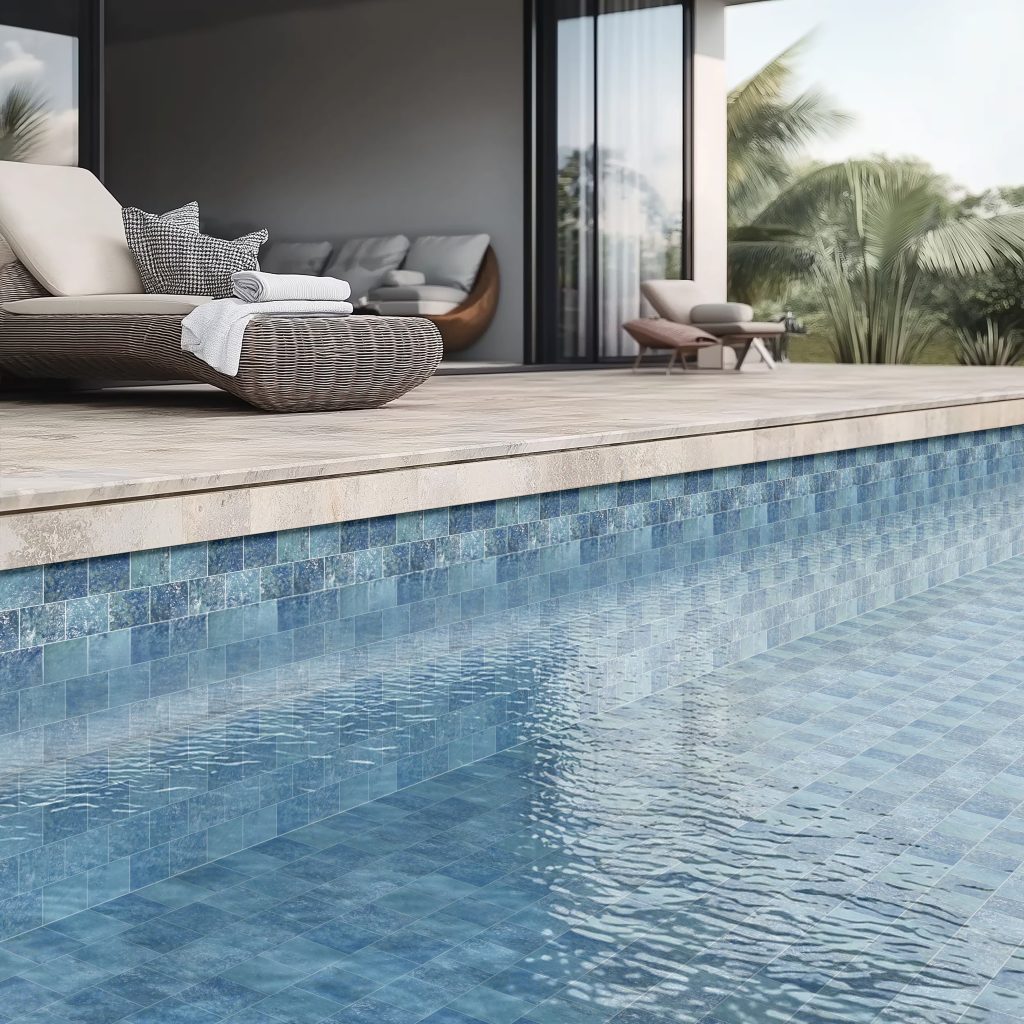
Choosing the right swimming pool tile impacts both function and beauty. These tiles protect the structure, enhance design, and improve user experience.
From ceramic and porcelain to stunning glass mosaics, options meet every taste and budget. Proper installation and maintenance ensure long-lasting results.
Whether building new or renovating, never underestimate the role of tile. The swimming pool tile is more than a surface—it’s a statement of style and durability.